The Blind Side contains 10 sexual references, 3 scatological terms, 8 anatomical terms, and 7 mild obscenities.
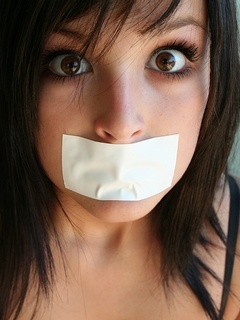 No, I’m not the one who counted them. Leave that to some Christian watchdog group. I mean, who else counts cuss words?
For instance, in 2005, Family Media Guide rated Oscar-nominated films and awarded Crash with the most profanity in the category of a Best Motion Picture. The movie contained a whopping 182 incidents of foul language, twice as much as its nearest competitor, which happened to be Brokeback Mountain with 92 expletives. However, Brokeback did trump Crash in two categories: 28 episodes of cigarette smoking compared to 6, and 22 incidents of sex opposed to 16.
I suppose these kinds of moral grading systems on films or books is helpful to some, but to me they create more questions than answers.
For example, when I was growing up, my parents banned the word “crap” from my vocabulary. Being the only kid on the block having such a muzzle seemed unfair. I mean, “poop” just didn’t cut it. Nowadays, however, “crap” doesn’t carry the same weight. (Neither does “poop” come to think of it.)
It’s true of many terms. For instance, it used to be that if someone “sucked” they were performing a sexual act. However, the use of that term has changed. Now…
 In fact, actor Dennis Leary even challenges us to Suck On.
Which leaves me wondering, Is “suck” a bad word anymore?
Okay, so the acceptance (or rejection) of swearwords is often dependent upon one’s era, geography, culture or lack thereof. One of my all-time favorite reads is G.K. Chesterton’s, The Man Who Was Thursday, a brilliant apologetic fable which is routinely considered his greatest work of fiction. Chesterton was an avowed Christian. Nevertheless, the novel is sprinkled with mild expletives like “go to hell” (ch. 9), “damn it all” (ch. 2), and my favorite, “You great fat, blasted, blear-eyed, blundering, thundering, brainless, Godforsaken, doddering, damned fool!” (ch. 10). I’m unsure what has happened in the century since that book was first published, yet I can’t help but wonder if Chesterton’s masterpiece would survive the scalpels of contemporary Christian editors.
The same is true for the Bible. For instance, Jesus called Herod a “fox” in Luke 13:32—a term which, culturally, could have meant anything from clown, to jerk, to jackass. In fact, some religious folks are shocked to discover that old King James’s version of Scripture can get a bit dicey. Forget about “pee”—the good king goes straight to “pisseth” (I Sam. 25:22, I Kings 14:10, II Kings 9:8 KJV). Furthermore, “ass” and “bastard” are employed frequently in the earlier editions of God’s Word (which also includes examples of asses and bastards in living color).
This presents an interesting dichotomy: Even if I read the Old KJV and believe it, I cannot write like it and still be published in some Christian circles.
So while most of us would agree about the inappropriateness of certain  expletives, as well as biblical exhortations to mind our manners, inevitably, each of us must draw lines concerning what is and is not offensive. But who’s drawing them and where they’re drawn is another story.
For instance, what amount of cussing (or sex or smoking) is unacceptable? If you live in a monastery, probably all of it. On the other hand, I work with a group of guys who speak only in four-letter words. Were I to demand they filter their filth, I’d become a laughingstock. Or unemployed. So perhaps it depends on what world you live in. For most of us, all variations of the “F-word” are unacceptable. (Although nowadays, people use “flippin’”, “freakin’” and “friggin’” to the same end. Should these words be outlawed too?)
Note: I have heard from some publishers that flippin’ is allowable, but friggin’ is not. Why? Friggin is phonetically closer to the F-word in its various constructions.
Anyway, it makes me wonder whether or not we’ve sorely missed the mark, whether or not we are straining at gnats and swallowing camels (Matt. 23:24). Instead of celebrating quality craftsmanship and engaging the world with our stories, we’ve become moral policemen, cruising the movie theater or book store, passing out citations for the most “asses,” “F-words” and cigarettes smoked.
I once heard a preacher open his sermon by saying, “The world is going to hell and most of you don’t give a damn.” After a pregnant, rather uncomfortable pause, he said, “And the problem is, most of you are more concerned I just said ‘damn,’ than that the world is going to hell.”
I wonder that the same applies to Christians in the arts.
Like my idol, Chesterton, I yearn for the glorious day when I can raise my literary voice and say without fear of censure: “You great fat, blasted, blear-eyed, blundering, thundering, brainless, Godforsaken, doddering, damned fool!”
But sadly, I fear that day is a long way off.

Great piece, Mike, and I’m glad to see you expanding on these thoughts.
I began re-thinking this issue when a strong Christian man for whom I was volunteering, who led a family-friendly, politically active, social-conservative organization happened to say that “Jesus didn’t give a damn” about something.
As a good homeschooled teenager at the time, I simply thought I hadn’t heard him say that, then finally I realized he had, and went to ask about it.
He was very gracious, and explained his view, that he believed the intent behind Bad Language, such as anger or hatred toward someone or something (even the universe for not cooperating exactly with our plans, as if we were God) was the sin, not the Bad Word. For that reason, he personally did not believe it would be a sin to, in the spirit of encouragement and intense approval, say to his child after the child had done well in a sports game, “Hell of a good job, son.”
However, even while sharing his logic with me, he said that based on his leadership role among many Christians, and also if I continued to be uncomfortable with the words’ use — he assumed I would be — he’d continued to hold back. I don’t remember him saying such a word since.
Nevertheless his view has remained in my mind, in the above-described detail, ever since. His Biblical avoidance of causing a “stumbling block” to me, combined with Pauline-like reminders that there really is no intrinsic sin in eating meat that someone else has used in an idol-worship ceremony, was a tremendous blessing to me — a combination of grace and truth, respect and challenge. Thus I hope to imitate this to other. And I posit that it’s the perfect way to show love to Christians who (like I had been) were perhaps more concerned about Counting Cusswords than others’ rebellion against God, out of legalism or genuine stumbling-block reactions, while also challenging them to more-Biblical beliefs about what really causes sin and what would truly glorify our Creator even more.
Stephen, this objection is very important, very reasonable, and one I do not take lightly. I’m afraid I have to answer by referring you to another blog post of mine entitled Let’s Stop Being So Easily Offended. From my perspective, most of the profanity guidelines in Christian publishing are not generated by young believers or have a genuine eye toward their sensitivities, but by much older, more “mature” folk who have developed a “touch not / taste not” attitude toward language (and lots of other things). In that post I call them “Professional Weaker Brothers.” I have come to believe that much of what Christian art has come to be has been shaped by “Professional Weaker Brothers” not “babes in Christ.” Thanks for your comments!
Then there’s the hilarious moment in C. S. Lewis’s Great Divorce when a ghost realizes for the first time that some sinners actually make it to heaven– and remarks, “Well, I’m damned!”
“Like” 😉
If the MPAA were to put a rating on the Bible it would
Rated R, for extreme violence, sexual content and language. For mature audiences only.
I have no moral objection to the occasional use of foul language. It might be a cultural thing, my father was in the Navy and literally swore like a sailor. But I also think sometimes, in some situations, with some people, there is just no other word I can say to express how I really feel than “F!@# You Buddy.”
So I am with you Mike, lets save our offenses for the things that really offend us, like Amish Fiction.
JC, you just had to go there.
I’ve spent more than a few moments puzzled over the apparent fact that calling someone a “fag” is worse in America than using the “f-word.” It’s about what’s socially acceptable, just as missionaries need to understand the culture of the village they visit, we too need to understand ours as we seek to fulfill the great commission. We are subject to operating within the confines of these parameters, and though we may know that the parameters make little sense, they are not easily adjusted. It takes time and persistence by large populations of influencers to change social standards and acceptance. But how much of this matters to us? It matters to some and so be it. Let it matter to them.
“So I am with you Mike, lets save our offenses for the things that really offend us, like Amish Fiction.” I love this!
Damn, hell, crap don’t elicit offense from most readers. “Suck” still pulls up its original meaning for me, so it makes me cringe. Cringe but not ban a book. CBA is very concerned about offending its readers with “bad” language but not a bit worried about “bad” doctrines. Go figure.
Good post, Mike. People miss the mark with good intentions (and we know where that road can lead). We talk about the desire for a “higher standard” for the quality of Christian art, so it seems ironic that we can sometimes get bogged down in discussions about banal words, not that we’re doing that here. Finding that place that works and not being afraid to go there . . . will we see it? I don’t know.
Wrong reasons for censure or censorship are so easily cloaked in false right reasons.
There is lazy fiction that sprays inappropriate or, worse, useless words in dialog to demonstrate character traits. A rough guy curses constantly – the author showing that he’s rough guy every tenth word or so. This an abuse of the reader, particularly when a well-placed oath can do the work of a thousand scattershot ones. Some of Stephen King’s “swearing” characters become parodies of themselves as their cursing becomes ridiculous (particularly his “Jesus H. Christ jumped-up in a sidecar”-style shenanigans. That just never rang true.)
I just marked up a student paper the other day because he casually used obscenity. It wasn’t offensive – it was inappropriate for the paper’s stance. Because of those abuses, the wrong-headed professional minder can hide behind that critique (“oh no, it is not offensive, it’s not censorship, that word is just not the best one for this audience.”) in a push to mangle well-crafted confection into unsweetened fudge puddles. This makes the story palatable: like a vitamin tablet, but not particularly entertaining. No one likes a tale on crutches.
There is an unintended consequence of this level of word counting: it distracts the writer’s mind, akin to telling him to “not think of elephants.” The only time I find myself struggling to keep out excessive “offenses” from my writing is when I hear of a list of perfectly acceptable minor tools I’m not supposed to use for one reason or the other. I can’t think of the last time I used my bricksaw, but if someone tells I can’t use it to build a birdhouse, I’m suddenly going to have an itch to see if it can be done.
I think I just accused these mindful editors and publishers of being agents of temptation to sin. That wasn’t my intention, but logic leads where it will! 😉
Dan, the common argument I seem to get from believers for not using expletives in our fiction is “You can tell a good story without cursing.” This is an awfully weak answer and actually tips the hands of those who use it. They not only assume that all bad language is unnecessary to the story, they infer that you can’t tell a good story with bad language (which junks some terrific authors). As with the student paper you graded, there is a difference between a curse word being “offensive” and “unnecessary.” The Language Police believe that all cussing is “offensive” and therefore “unnecessary.” But there’s a difference between putting cusswords in the mouth of a character who doesn’t need them, and putting cussowords in the mouth of a character who does. In this case, being “offensive” IS THE INTENDED EFFECT. Thanks for commenting, XD. Great stuff, as usual.
An elephant good article, Mike.
Sorry–tried to cuss, couldn’t quite do it. I’ll keep practicing.
“…a push to mangle well-crafted confection into unsweetened fudge puddles.” Now, there’s a tasty phrase. Brilliant, xdpaul.
I just had this discussion with my 10 year old, who was actually developing quite the legalistic view on cussing – as in, if someone cusses they must be going to hell type thing. Well, crap, if she hears her dad smash his foot in the garage and yell out a big “shit” one day, that’s going to be quite an eyeopener.
I’m with E. Stephen Burnett’s Christian friend. It’s not the word that’s a sin, but the heart behind the word – I can say something very hurtful and evil without using a single cuss word. However, I told my daughter, it’s not like we can just go around saying whatever we want because cussing IS identified as “unChristian” behavior by those in the world. Therefore, the company you are with makes a difference. I might use a word around my very best friends – who understand what I believe – that I would never use in public, because I wouldn’t want to be identified as unChristian or worse yet, hypocritical. My witness matters and how I’m perceived by others makes a difference.
However, considering there are instances in Scripture where the prophets say ‘your sacrifices are like big, steaming piles of . . . oops, slang word for refuse’ then I’m pretty sure God isn’t getting all anal over it. Really. Pretty sure He’s worried about way more than cussing at this juncture.
As for using it in writing, there are just times when it is stupid to write ‘and he used an expletive’ when you could just write “Shit,” he said.
A friend, a pastor, recently shared a story that several years ago, the senior pastor informed her that she needed to stop using the F word. She told him that she never used the F word and inquired exactly what gossip had been told. The pastor stated that one of the members informed him that she said this during choir practice. She protested and said ,”Tell me exactly what I supposedly said.”
” FART!”
Another F-word? Here I thought one was enough. That’s funny, Ruth.
I’m going to remember this story and share it. Very good point made. 😉
For better or worse “crap” and “suck” are a part of my vocabulary.
As a writer though, I view words as my tools. They are amoral. My completed manuscript has the f-word, bleeped out, only because I fear it may offend, but me…I understand it strengthens the characterization of that one individual. It’s there for a reason, not because I want to “show off” or “be edgy”.
I’m intending my current WIP for Christian women, however, I’ve already used the word “friggin'”. Yes my character is a Christian, but if I’m being real, even Christians use modified expletives. It’s not something to celebrate, but if we are trying to portray the world realistically, those words are going to be in there. If out goal is to create an ideal world, or an ideal character, which is okay too, then the rules will be different.
I’ve been following this discussion with interest over the past few days. Way to make us think again, Mike.
Now, forgive my naivete, but I have a few questions:
What’s preventing Christian writers from recording the words they believe are the absolute best choice for their book? Is it the publishers? Readers? Both?
Should it matter?
If you’re writing the book you believe God meant you to write, shouldn’t you make it your best regardless of what the naysayers around you are saying?
I know, clueless questions, but I’m just curious.
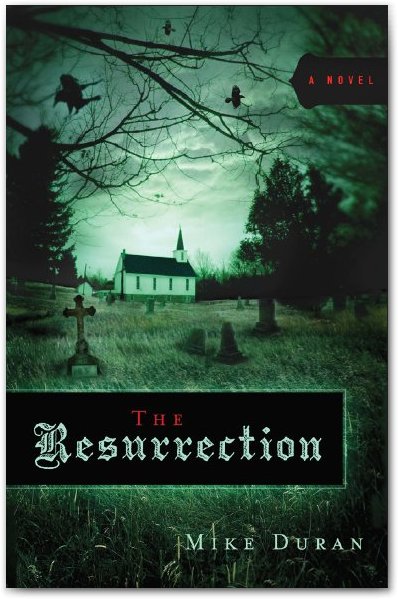
From what I understand, Brenda. Christian publishing houses DO have lists of words you can’t say. That was the huge controversy that erupted between Ted Dekker and Steeple Hill several years ago where he referenced a list of words that that SH would not publish, many of them little more than very mild slang. (The publisher has since removed that list from their website.) When Realms accepted “The Resurrection” I was asked to remove most of the language. I expected this and it wasn’t a huge issue to the story. One of the characters, a cynical construction worker, suffered the most and, I think, could have benefited from an occasional “damn.” But it’s just the “sacrifice” you make being published in the Christian market.
One example that, I think, did hurt my story: A pastor confronts a demon and says, “Go to hell.” I thought this was appropriate, after all, demons should go to hell. The publisher requested I change that. I appealed to them to reconsider. However, it was a policy to not allow the phrase “go to hell.” I think that’s an example of how a blanket approach to language can kinda hurt Christian stories.
So writing the book you feel God wants you to write is totally different than where that book will be published. I think we’re mistaken if we resist / avoid collaboration in the publishing process. Writing the story the way I want is no guarantee it should stay that way. I wrote the story I felt God had for me, but I also felt God opened the door to be published with Realms. In the end, bad language was incidental to the story. But I would love to have my “go to hell” back.
Sorry for the long response, Brenda. Did that answer your question?
That makes me remember a great song from the eighties by a controversial Christian metal band:
Speak of the devil
He’s no friend of mine
To turn from him is what we have in mind
Just a liar and a thief
The Word tells us so
We like to let him know
Where he can go
To hell with the devil
To hell with the devil
When things are going wrong
You know who to blame
He will always live
Up to his name
He’s never been the answer
There’s a better way
We are here to rock you
And to say…
To hell with the devil
To hell with the devil
(anyone remember this song? 😉 )
Got into a similar discussion on Amazon regarding this issue and IMO, this falls into the ‘understanding’ it but not ‘getting’ it category. Not that I’d advocate being puerile or deliberately vulgar but writers have rights and responsibilities to the vocation and God. You have to write what’s necessary and not shirk away from either.
I review for several Christian publishers. I expect clean language from from those fictional characters following Christ. But honestly, sometimes clean language from those characters who are not often seems out of place . How do publishers feel about printing the first letter followed by lines? Seriously, the entire idea of censorship bothers me.
BTW,the “go to hell” line should have been included. We all should be telling the devil go there!
Mike, I counted 14 mild obscenities, 3 scatological terms, and 14 terms with sexual connotations in your post.
What this exercise taught me is that I just wasted 5 minutes of my life that I will never get back.
Ha! Only 3 scatological terms? Man, I’m slacking.
As usual Mike, I don’t have a lot to add other than: excellent post. Maybe someone already mentioned this, but the reaction to a Christian writing a character and making them swear is equivlent to ME swearing or living vicariously through my character.
It reminds me of a post by a CBA aquisition agent years ago, lamenting over whether or not ANY characters should die in Christian fiction, because then we were condemning lost souls to hell without a chance for redemption. I thought: “Uh. You do realize this isn’t REAL, right? That’s why it’s called FICTION.”
I was told by one Christian publisher I could kill as many people as I wanted, but I couldn’t swear.
Go figure.
I’m happy to say that as a Christian I can write exactly the way I want, using whatever words I feel are needed based on what I think my audience, (determined by me,) will tolerate and what the story calls for. I’m excited to know that general market publishers don’t give a damn about censorship and pretty much never have. Censored work doesn’t protect anyone but rather destroys creative integrity.
It seems to me that most Christian groups (or conservative groups in general) are more concerned about the words being used than they are about the content being communicated. In my opinion, saying “fuck, I locked my keys in my car!” and “bananas, I locked my keys in my car!” convey the exact same content, so why is the first phrase considered to be so much worse than the second phrase? Saying “fuck, I locked my keys in my car!” is even considered more offensive than saying “I want to bang you,” even though the first phrase conveys no offensive content while the second phrase conveys extremely offensive content.
I also noticed that the original post and all the preceding comments, everyone censored “the F-word” which I honestly find funny considering they seem to be criticizing censorship.
Leah, like it or not certain words are more socially / culturally loaded than others. Conversely, and to the point of this post, most Americans would agree that others don’t have the same weight (see crap, damn, ass, etc.). Me not spelling out the F-word has nothing to do with censorship, or else I would delete your comment. It has to do with this being a public blog, aimed at a generally conservative readership. Were I blogging for anarchists or raunchy college kids, I would not employ the word “bananas” as an expletive.
Furthermore, I’m not trying to provide a justification for why individuals should curse, but for why Christian shouldn’t be prudes about it, especially if it’s a fictional character who has good reason to not watch his or her tongue.
Thanks for commenting, Leah.
brilliant, mike. i , for one, am a small press owner/editor who is really sick of the hypocritical dichotomy of so many in the christian realm (and i /am/ a committed follower of christ).
every word has its place, and i’ll even address that in an upcoming book of mine — one which will no doubt be censored and censured by many in the christian community. ah well. life can suck like that sometimes, eh?
~chila woychik
port yonder press
God always looks at the heart. The same two words can be said with opposite motives.
I taught literature at a Christian private school, and many well-meaning parents were concerned about the content of the classic novels. Luckily the pastoral staff sided with me, and I simply explained that the Bible is filled with stories of sin and redemption. The intent is not to glorify sin, but to learn from it.
Why did Paul say this, then?
Ephesians 5:3 — “But among you there must not be even a hint of sexual immorality, or of any kind of impurity, or of greed, because these are improper for God’s holy people. Nor should there be obscenity, foolish talk or coarse joking, which are out of place, but rather thanksgiving. ”
I tend to lean toward fearing the Lord and believing his word. But I don’t waste my time thinking about how many cuss words are in a movie, either. I would rather do other things.
Jane, I said this in my post: “…while most of us would agree about the inappropriateness of certain expletives, as well as biblical exhortations to mind our manners, inevitably, each of us must draw lines concerning what is and is not offensive.” I don’t think many of the commenters here would dispute that the Bible cautions us to watch our tongue. The sticky part, as a mentioned, is whose tongue am I watching? “Obscenity” for you may be different for someone else, and imposing your rules on someone else may be just as sinful as obscenity.
Please note: This post (as is much of my site) is directed towards writers. Christian writers face a unique dilemma in how we approach bad language in Scripture. I personally don’t believe the command to watch my tongue necessarily means I can’t write about a character who doesn’t. But that is the dilemma.
Thanks for dropping by, Jane!
Like it or not, I learned my language from the public school system where I spent 5 days a week, not the church where I spent 1 day. You wouldn’t believe the f***s I can spout when I fall down the stairs (which just happened the other day), or get pulled over by a cop (when I go into panic mode). What gets me is that some of the bad word ire is all nonsense. If a word has a good Anglo Saxon root, it’s not acceptable, but if it’s Latin and means the same damned thing, it’s okay. Give me a break. Feces means the same thing as shit. That’s all just snobbery. What really gets me, though, in books or movies, is when somebody uses the name of Jesus in a cursing manner. That hurts me, repels me, makes me want to step out of the story I’ve been drawn into, even if the cursing fits the character. So we all have lines we draw, places where our souls don’t want to go. Some of our souls just take their cues from Petrarch. Even if we have no idea who Petrarch is from Shakespeare, a man of Anglo Saxon language skills, who corrupted Petrarch’s Latinate sonnets. 🙂
Jane,
I’ve wrestled with that verse myself, because I don’t want to be conformed to the culture when the Word tells me to live a different way. However, reading it tonight helped me see the context a little better. Among God’s people there shouldn’t be obscenity – true. What we’re talking about here are fictional circumstances and characters. Ruth said above that she expects Christian characters not to cuss, but recognizes that non-Christian characters aren’t necessarily held to the standard of Eph 5:3. Having just finished The Resurrection, I can totally see how the construction character should have a few damns and hells in the mix.
Is there a separation between us as God’s people and the art we produce? I think there is/should be to a degree. I don’t think you can have Christian erotica, but for an issue of a non-Christian character acting true to their personality, I think it should be allowed. I know many people read Christian fiction to read something “safe”, and I think there is a place for that. But I’m tired of art that rings false because of artificial constructs of what is good. Can there be a two-tiered path for CBA fiction?
I can hope, but I’m not holding my breath either.
Since I always enjoy playing devil’s advocate I am just wondering if anyone here would feel comfortable dropping a few F-bombs as a part of a conversation during fellowship time at church. Looking forward to your replies. And lest you think I’m a prude, I have no doubt one line in my MS under consideration right now will be axed if I get a contract.
For those who believe there is no such thing as censorship in the general market I would highly recommend listening to an interview I just conducted with Vicki Hinze over at FictionAddict. Vicki had 22 novels published in the general market and she would quite disagree with the notion it’s only prudish CBA folks that censor. Sure they allow words they are comfortable with but they also find plenty of ways to nix subjects they are not.
Tim, I’m not sure if you’re suggesting I’m advocating cursing, because I’m not. Each person must draw their own line and answer to God. I AM suggesting that Christian readers and Christian publishers often view art through a “touch not / taste not” (Colossians 2:21) lens and have become out of step with our culture as a result. (I mean, here we are debating whether one of my characters can say “hell.”) But please don’t mistake what I’m saying as a license to unload (verbally) on your fellowship group.
However, I DO agree with you about censorship in the general market. It is, however, not words that secularists target as much as ideas, usually those of conservative religious variety. But even then, I’m reluctant to cry conspiracy. After all, Glenn Beck, Tim LaHaye, and William Young all traffic in conservative and religious ideology and seem to be doing just fine in the general market.
No Mike, I wasn’t thinking or suggesting any such thing of you. And I agree with your observations about culture police and hyper-sensitivity to certain words and subjects among CBA publishers. This is your forum and I will not hijack it by continuing to debate how much we should reflect the culture or seek to elevate the culture.
My point was that general market publishers censor in just the ways you mentioned.
Here’s link to the thoughts of someone who is a far better word-smith that most of us. Perhaps a counter-balance to the whole discussion.
http://charisconnection.blogspot.com/2006/11/ad-bobos-in-christian-fictionland.html
Interesting post. You have some good insight. I want to know why your book is not available on the kindle? I want to read it!
What about context and proportion?
No one is saying people should spout of profanity in church or everyday conversation. No one’s saying certain words don’t have weight and/or contempt behind them. Writing-wise, no one’s advocating gratuitously inserting profanity for shock value where inappropriate for the story and audience.
A writer has to create credible settings populated by authentic characters. Show- not Tell is the first rule of fiction. Christian writers have to pursue their calling with strict conviction, but that conviction, that responsibility, cuts both ways.
To be credible, some of those characters do and say bad things. (Just like in real life) It’s disingenuous, even insulting, to have evil characters act half-christian for fear of offending somebody’s religious sensibilities. It’s also a violation of the writer’s responsibility. Sensitivity is fine, but at some point, deliberate inconsistencies in setting and characterization are sloppy and stupid.
(The same rule applies to representing Christian characters. Don’t make them vile hypocrites and insist they’re authentic representations of the faith. )
Critics not only trot out the same couple Scriptures – often missing the principles – but also threaten to be “deeply offended”, as if it’s a trump card that ends the debate. Now it’s a question of proportion.
If you really want to be deeply offended, go to Amnesty International or Voice of the Martyrs. Watch the “Smartest Guys in the Room” about the Enron fiasco. Read up on child soldiers or sex trafficking. Stop getting your knickers in a twist about fictional characters uttering cuss words.
You’re straining out f—ing gnats and swallowing the whole d–n camel. Life is too short and too important to waste indignation on trivial indelicacies.
I wonder how many of those that are afraid of a general curse word is able to remember how Jesus cursed in scriptures?
What?
You mean you don’t remember any of those instances?
Okay, I’ll name a couple for you and you can look up the rest on your own.
One instance is when J.C. and the boyz were heading into Jerusalem and a fig tree was displaying its leaves which was an indication that it should have had fruit on it. Jesus thought he was going to have himself a holy snack when he found no fruit even thought the leaves were there. He got pissed off and cursed the tree. The boyz were surprised, but they went on into the city. On the way back out (after Jesus had overturned some tables and had some other choice words to say), they found the tree withered up from the root.
Then there was another time when he was yelling at the Pharisees and Sadducees and called them “unwashed tombs” and a “brood of vipers”. How different is any of that than calling a person a “bastard” or a “son of a bitch” today? What he had to say was equally piercing words that were quite insulting to those he was talking to.
And as far as the word “fuck” that most have shortened and one other used quite blatantly, I’ve heard a story that was told personally to me by more than one person and have seen variations online when I look it up.
The story goes that there was this village in Europe that had a unique way of dealing with adultery and when they found someone caught in adultery that person had to carry around a board on their shoulders with the capital letters of “F” “U” “C” “K” on it. Those letters stood for “Found Using Carnal Knowledge” and was apparently the basis for the novel “The Scarlet Letter”, but by then the word was a very “offensive” word, so the author had to come up with an alternate way of saying things.
So, it’s really just a matter of perspective and as Mike mentioned in his original post, there are words that over time lose their “offensiveness”, and with the way so many people use the “F-word” nowadays, who’s to say that it won’t be a very accepted word just a few decades from now?
In the meantime, if a character is saying the word in your head when the story is playing out, then write the word down. If not, then don’t “force” any words into what that character is saying or it will seem forced to those that know the difference. As far as the life of an individual, then you have to do as your conscious and relationship with God dictates. Thank God for the grace He gives and His unending love! 😀
When the Bible said that Jesus ‘cursed’ it didn’t mean that he used a swearword. There are more than one usage of the word ‘curse’ for example: ‘a prayer or invocation for harm or injury to come upon one : imprecation People believe that there is a curse on the house.’–Webster’s Dictionary.
David, you said it better than I could. Thanks. And I would agree on all points.
~Chila
P.S. Of course, as wise parents, we must consider all this when raising children, and while we want to make sure they get a real view of life, we also want to give them guidelines while not overprotecting them from reality. Adults are an entirely different matter, however. Let’s not treat them as naive children, folks.
I very much enjoyed your thoughtful post. In thinking about it, I can’t seem to recall Jesus saying “Come unto to Me… But clean up your act first.” He welcomed all comers, who were then transformed by His love.
By the way the genesis of the quote you close the post with is likely this:
“I have three things I’d like to say today. First, while you were sleeping last night, 30,000 kids died of starvation or diseases related to malnutrition. Second, most of you don’t give a shit. What’s worse is that you’re more upset with the fact that I said shit than the fact that 30,000 kids died last night.”
–Tony Campolo
Contributed by: somnium
I find it interesting that you have almost four times as many comments on naughty words than you do about our lack of taking advantage of moments in which we might witness to the lost.
Well, I’m sure the morality police would find problems with some of my stories. And I’ve not totally avoided cuss words, fairly minor ones at least, though even those are used far and few between. I think in the Reality Chronicles, I had one character say “damn” one time. I tried to think of something different he could say, but for whatever reason nothing else “fit” him and his situation, so I left it.
Though what I would have said in his situation is doggoneit. I used that the other day, actually. Carryover because that’s what my dad always used. But I know I can’t have any of my fictional characters say that as most people would simply think I was trying to get around saying a “bad” word, despite the fact that for me the word is very natural.
So yeah, I get the necessity of using such words at times for characters in our fiction. I get that it can seem like focusing on gnats while ignoring camels. But let me offer two or three other points to consider in this.
One, it is a logical fallacy to say that because there are more important things to deal with, that we shouldn’t be concerned about something like how many cuss words are in a book or movie. The reality is if we *only* focused on the most important thing we have to deal with, nothing else would ever get done in our lives or the world. Just because something isn’t the most important doesn’t by default mean that it should not be dealt with. If that were true, you could nullify anybody’s agenda because we can always come up with a more important cause than the one being promoted at a given time. I mean, based on that, none of us should be writing fiction, because, you know, there are just so many more real life important things, like feeding starving children, that we should be spending our time on.
Just because it isn’t important to *you* doesn’t mean it isn’t important to others.
While I’ve never checked out how many cuss words a movie has with this group before going to see it, personally I wouldn’t mind knowing that information. It doesn’t mean I won’t go see it if it has X number, but having that information can be helpful in deciding. Because personally I can’t stand watching or reading stuff with a bunch of cuss words in it. I don’t care how natural it is to the characters, I won’t watch or read it. I’m not saying no one should, but for me, I can’t stand it. It distracts from the movie or book because for me, it almost always sound unnatural and forced to have cuss words on every page or even every chapter, or ever few seconds in a movie. I can’t enjoy such a movie anymore than someone can enjoy a movie or book that has unbelievable plots, characters, and dialog.
But that’s just me. But the fact is, there are a lot of people just like me.
So, two, the fact is that cuss words do offend a lot of people. There are a lot of people who don’t go through every day hearing cussing. Very few of my friends cuss on a regular basis. I currently have no one I know who cusses every other word, though I have met folk like that. But there is also a large contingent of people out there who don’t cuss generally, and don’t care to read it or hear it, either from their entertainment or the people they hang around with.
The fact is, you will offend a segment of the population, even some non-Christians so I don’t consider it purely a Christian vs. non-Christian thing, but if you leave them out, no one will tend to be offended who is used to them. They might feel a bit like it is not true to life as they know it, but so is practically most everything on TV and in all the popular movies.
Which is why the big hits are almost always a rated PG or PG 13 movie. The R rated has its audience, but a producer knows once they move from PG-13 to R, they’ve cut off a potential audience and it will be much harder for it to be a “hit,” and even more so if the reason for the R rating is due to sex or language.
This is even more true for the Christian audience than it is for the secular. I think most people save for the zero-tolerance crowd will let a word or two here or there slide by, but if there is a lot, and your target audience is Christian, you’re only shooting yourself in the foot as far as who you will reach. It will make it that much harder for the book to be success.
So, for me, it comes down to two things. One, I simply don’t write using cuss words because they do often sound unnatural to me. There are other ways, more effective ways, to make your bad guy bad than throwing cuss words in their mouths. There is rarely a reason to use them, but I understand there can be times when they are called for. Like a book aimed at gangster society. There would likely need to be some cussing to make it “real” to them, though I would suggest that can be accomplished without having it on every page.
And the bottom line is to include much of it alienates part of your audience. I have to have a good reason to purposefully alienate people from picking up my books. I want to write in a way that attracts the greatest number to read my books.
Note, there may at times be a good reason to put something into a book that you know certain groups don’t like. There are things like that in my books. I have under-aged characters drinking ale, because it would be natural for that to happen in a Medieval style culture. But I have no doubt that the fact would alienate certain people from buying my book, and if it ever became popular, there would no doubt be Christian groups warning about that and my use of magic.
I’m not against writing what is on one’s heart, but one needs to be aware when you are writing something how what you are writing will affect one’s target audience, how it will limit it. But in most all cases, I see no reason important enough to include cussing in my stories that would justify making it unreadable for a segment of the population. Quite apart from the moral question around it, is the marketing question: who are you writing to? Are you willing to lose potential readers for your literary freedom and realism? If so, cool. As long as you know that going into it and don’t complain about it when the dodo hits the fan. 😉
And yes, oddly enough, that last phrase does sound natural to me. 😉
I think one of the points that is being missed here is that many Christians do not simply police this thing for themselves — they go so far as to try to force everyone within their sphere of influence ( and many outside it) to adhere to their personal mores and ethics. They cannot accept that not everyone is so easily offended, so sensitive that the mere presence of sex, violence, or foul language will wilt their very heart and soul. These kinds of people are incapable of doing any good in the world, due to being a wilting flower. A conversation becomes difficult to follow because everything has to be couched so delicately in order to avoid giving offense that sometimes, a person simply can say /nothing whatsoever/.
For instance, some find it offensive that I prefer black clothing to any other color. There are reasons for this: my job is very dirty, and black shows the least amount of grunge. Also, I simply like black because I do not want to spend more than five minutes putting my clothes on. I don’t want to spend time trying to figure out what goes with what. Black goes with everything. Or, for whatever reason, I might want to simply say what I need to say and get it over with. I don’t want to beat around the bush. I am admittedly rather impatient; if I have to spend 20 minutes explaining to you that you’re annoying, then, well, there’s something wrong with you.
It leaves a bad taste in the mouth to deal with many Christians who are ‘so heavenly bound that they’re no earthly good.’
THIS is why I’m self-publishing, among other reasons. This this this.
That quote from the pastor . . . Damn. Makes my heart and my brain hurt!!!
Blogging– promote your business.
Numerous companies currently make use of blogging pages
as a casual method of getting in touch with their customers.
For the smaller sized, or brand-new company owner, it’s
an outstanding means to advertise their items
without pricey advertising and marketing costs. Just by publishing a routine blog writing column, small firms could
often reel in even more business compared to by the much more standard
approaches.
Among these, the cosmetic or the aesthetic surgery is the most famous.
What do celebrities such as Kathy Griffin, David Gest, Kenny Rogers, Jill Saward and others regret.
Tissue expansion involves the use of a tissue expander (a balloon-like device) that is inserted beneath the scalp.
I think when Paul says ‘beware lest somehow this liberty of yours become a stumbling blockto those who are weak’ (1 Corinthians 8:9) it includes the issue of profanity. You may know that it’s bad and may even have the spiritual strength to not descend into it yourself when reading books with it–but I think it does become a moral problem when it comes to putting profanity in your own fiction.
Think of it this way: a weak Christian comes across your novel (in which you have profanity). He reads it and thinks. “Maybe bad language isn’t that bad. After all so-and-so uses it in his book and he’s a devout Christian!”–It doesn’t even have to be a conscience thought.
In other words is it worth it, putting profanity in your fiction, in the name of keeping dialog natural and avoiding a phrase like ‘John swore’ if it means that it could lead a Christian brother or sister to sin?
What about audio books, in which some actually says the words? Is it okay because ‘they don’t mean it’? The Bible warns us to keep all vulgar language from our mouths (Matthew 12:36-37, Colossians 3:8 among others)
I would also note that when the Bible’s usage of ‘the a-word’ is totally different from the modern curse-word usage–And the meaning is completely different at that.
For more on profane characters in books without profanity, read Jeff Gerke’s The Art and Craft of Writing Christian Fiction.
I’m sorry, I meant this as a reply to the post not you, Shelly…